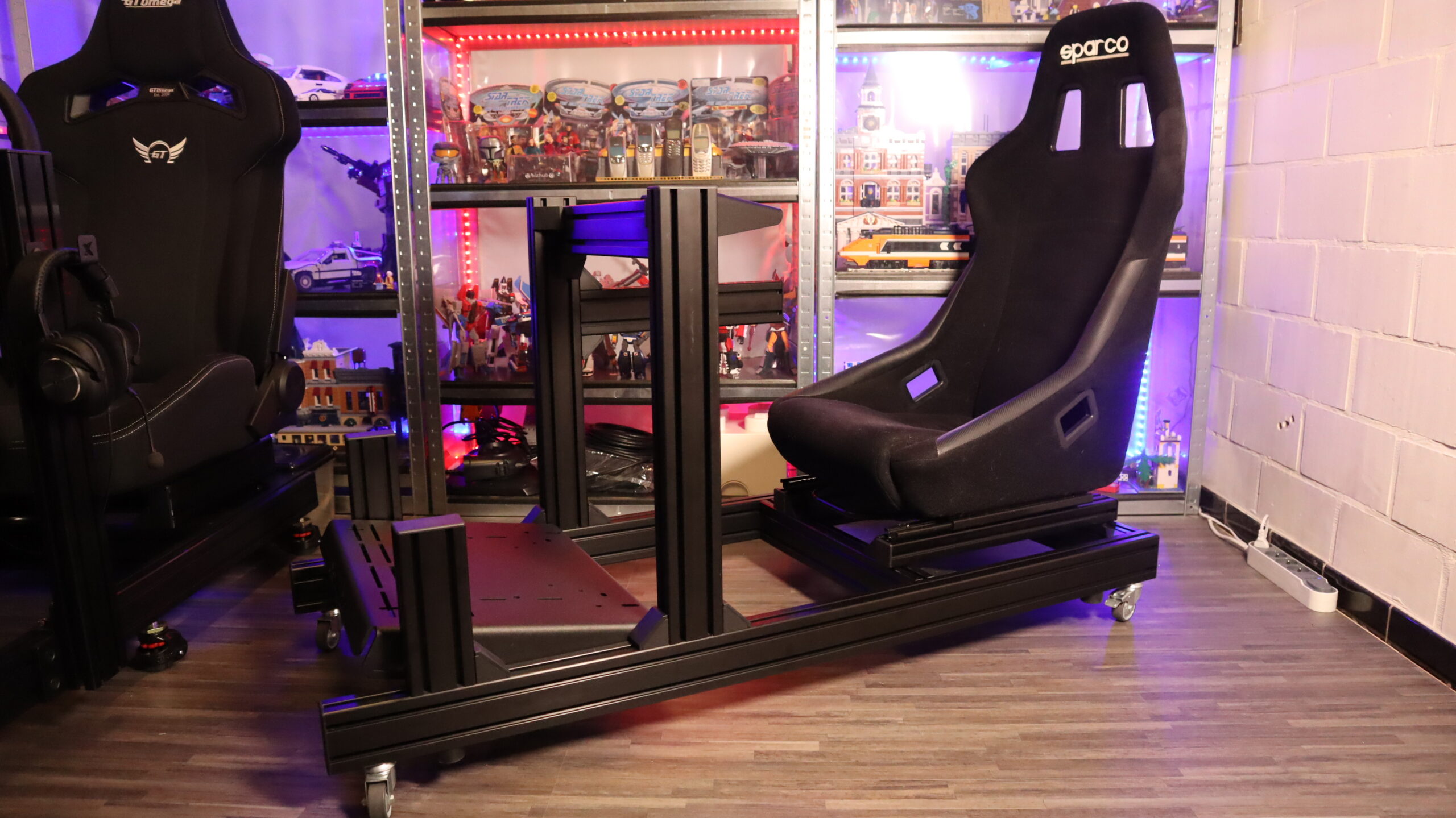
Sim-Lab GT1 Evo Review — A classic
The Sim-Lab GT1 Evo is a sim-racing rig that comes highly recommended.
If you ever scroll through Facebook groups asking “What rig should I buy without a budget?”, chances are very high that this name pops up almost immediately. The GT1 Evo has built a solid reputation over time — but how does it actually hold up today?
Let’s take a closer look.
⚙️ Configuration & Adjustability
The GT1 Evo is a fully fixed aluminum profile rig.
There are:
- ❌ No on-the-fly adjustments
- ✅ Fully bolt-down positioning
The only component you can change on the fly is the seat, provided you install seat sliders. Everything else — pedals, wheelbase, seating position — must be unbolted and repositioned.
That might sound inconvenient, but it comes with a big upside:
➡️ Once set, nothing moves. Ever.
🦶 Pedal Plate Design
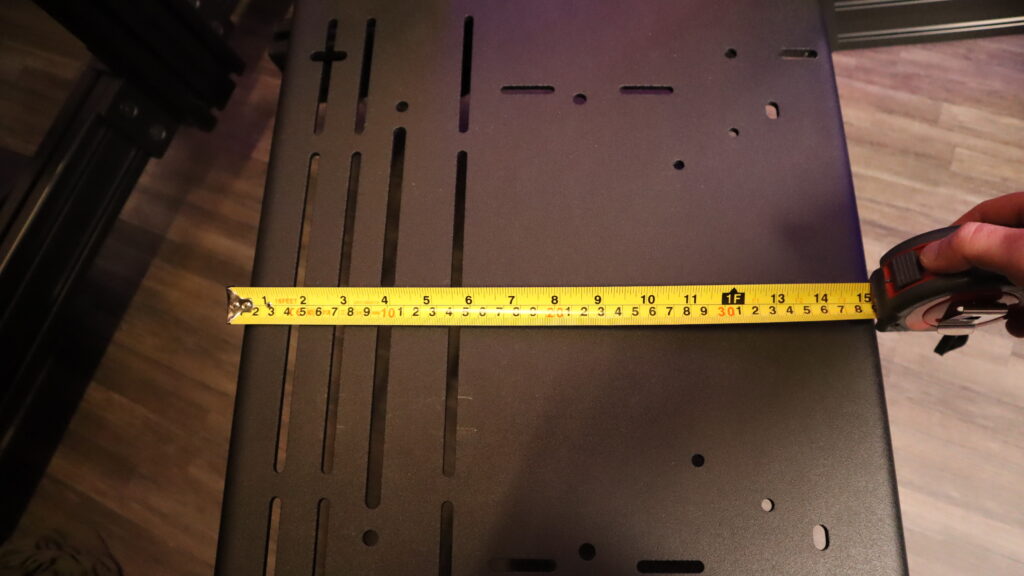
One of the more interesting design choices is the way the pedal tray inclination is handled.
Sim-Lab uses smaller additional profiles to create pedal angle. This allows:
- Extra inclination options
- Additional fixation points
- Two extra bolts locking the pedals into the grooves
Compatibility is excellent:
- ✅ Fanatec
- ✅ Thrustmaster
- ✅ Heusinkveld
I mounted my Thrustmaster T-LCM pedals using 4 bolts, and they were rock solid.
🛞 Wheelbase Mounting & Driving Position
Both the pedals and wheelbase slide along the main profiles, allowing you to:
- Customize reach
- Customize height
- Customize angle
Since nothing adjusts on the fly, you’ll need to:
- Loosen bolts
- Reposition
- Re-tighten
Yes, it takes time — but with this amount of freedom, it’s almost impossible not to find a good driving position.
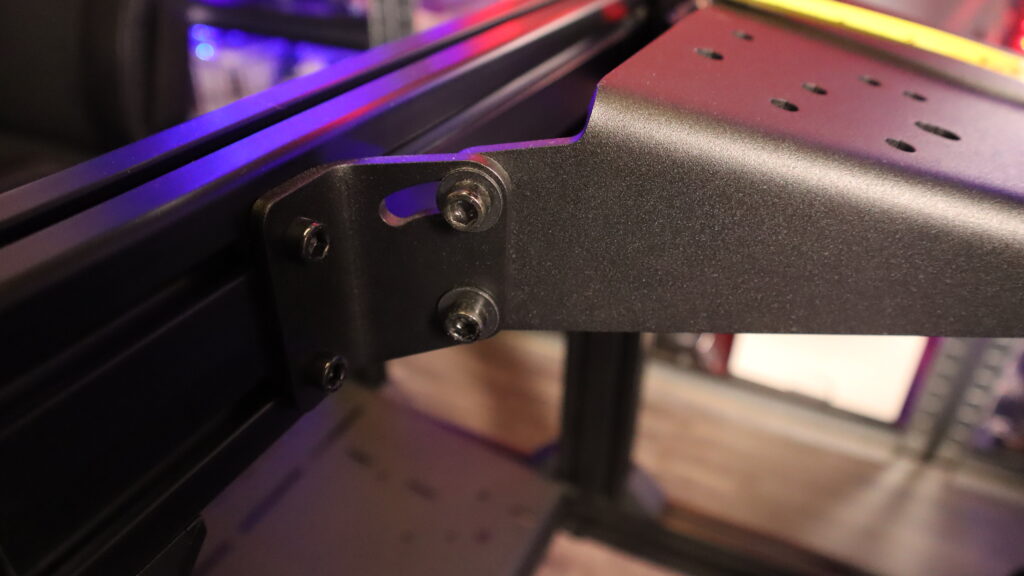
Even though the vertical wheelbase uprights are a bit shorter than on some competitors, the wheelbase still sits sufficiently high. Personally, I prefer a higher wheelbase position — and here, that was no issue at all.
🧱 Build Quality & Rigidity
Simply put:
🟢 The build quality is fantastic.
Everything feels solid:
- The pedal tray can be fixed with up to 6 bolts
- The wheelbase holder shows negligible flex
- Washers and mounting hardware are properly chosen
I was initially skeptical about the wheelbase inclination design (having seen flex in similar designs elsewhere), but here:
✅ No vertical play
✅ No up-and-down movement
✅ Very well executed
Would I prefer the wheelbase resting directly on a horizontal beam?
Yes.
Is this solution properly engineered?
Also yes.
🔩 Aluminum Profile Quality
The GT1 Evo profiles have:
- ✅ Thick aluminum cores
- ✅ More material than some competitors
Compared to rigs like the GTO Prime Lite, the GT1 Evo profiles simply contain more aluminum.
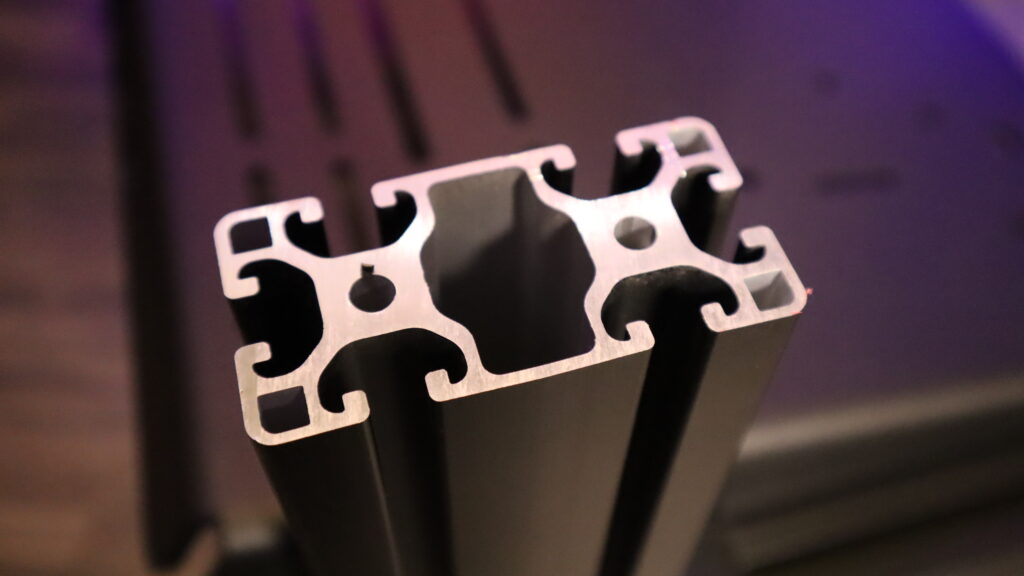
More aluminum means:
- Higher material cost
- Higher rigidity
- Higher perceived value
No weaknesses were found here.
Edit December 2025 Via a viewer of my video’s I heard that the profiles used these days are with less thick cores. This has not been verified by myself.
📐 Frame Design & Minor Criticism
The vertical wheelbase profiles are connected to the base using two fixation points. Ideally, side-mounted attachment would allow even more rigidity.
That said:
- There is minimal flex of the steering wheel
- It caused no real-world issues
Technically, it could be better — but practically, it works just fine.
🎨 Finish & Details
Sim-Lab did a great job with the finishing touches:
- ✅ Plastic covers hide bolts and connectors
- ✅ Clean, minimal look
Small downside:
If you bump these covers with your knee, they can pop off — a minor annoyance shared with some competing rigs.
A really nice detail is the:
✨ Laser-cut Sim-Lab logo on the pedal plate
Small touches like this really elevate the overall feel of the rig.
It does remain for style very sober though. Something that could be improved.
🪛 Accessories & Expandability
The GT1 Evo includes a side mount, which allows you to attach:
- Shifter
- Handbrake
- Mouse tray
- Other accessories
However:
- The side bar is only horizontally mounted
- It’s not vertically tied into the frame
This can result in slight flex, especially with aggressive shifter or handbrake use. It’s not dramatic, but noticeable.
As expected from Sim-Lab, the ecosystem is extensive:
- Cup holders
- Monitor mounts
- Accessory trays
- Add-ons galore
One particularly nice option:
🎨 Profile groove covers
These allow you to:
- Add color
- Personalize your rig
- Hide unused slots
This is something I haven’t seen from GT Omega or SimXpro — and yes, I really like it.
📏 Size & Footprint
With a width of 59 cm and a length of around 140 cm, the GT1 Evo is:
- ✅ Reasonably compact
- ✅ Smaller than some competitors
- ✅ Easy to fit into limited spaces
Compared to rigs like the GTO Prime Lite, this feels less bulky, which I personally like a lot.
💺 Seat Options & Pricing
Let’s talk money.
- GT1 Evo rig: ~449€
- Cheapest Sim-Lab seat: ~249€
- Seat rails & brackets: extra
Total quickly climbs to:
💸 ~720€
In comparison:
- GTO Prime Lite: ~650€
- Often includes free shipping
So no — the GT1 Evo is not the cheapest option.
💰 Value & Competition
The GT1 Evo has been recommended for years — and for good reason.
That said, some items are missing from the base package:
- No vertical support for shifter arm
- No shifter plate included
These missing parts slightly shift the value advantage toward competitors.
Still…
✅ The frame is solid
✅ The engineering is proven
✅ The quality is undeniable
🏁 Final Verdict
The Sim-Lab GT1 Evo is:
- ✅ A proven aluminum profile rig
- ✅ Extremely solid
- ✅ Highly customizable
- ✅ Well finished
It may not offer the absolute best value compared to newer competitors, but it remains:
🟢 A very good rig that I would still recommend without hesitation.
If someone asks me whether the GT1 Evo is a decent frame — the answer is simple:
Yes. Absolutely.
If you like my work and want to support this channel, consider buying via an affiliate-link. This helps me out without any cost to yourself.
Extra resources:
- 🎥Video review
- 📝Scorecard
- 🛒Affiliate-link

