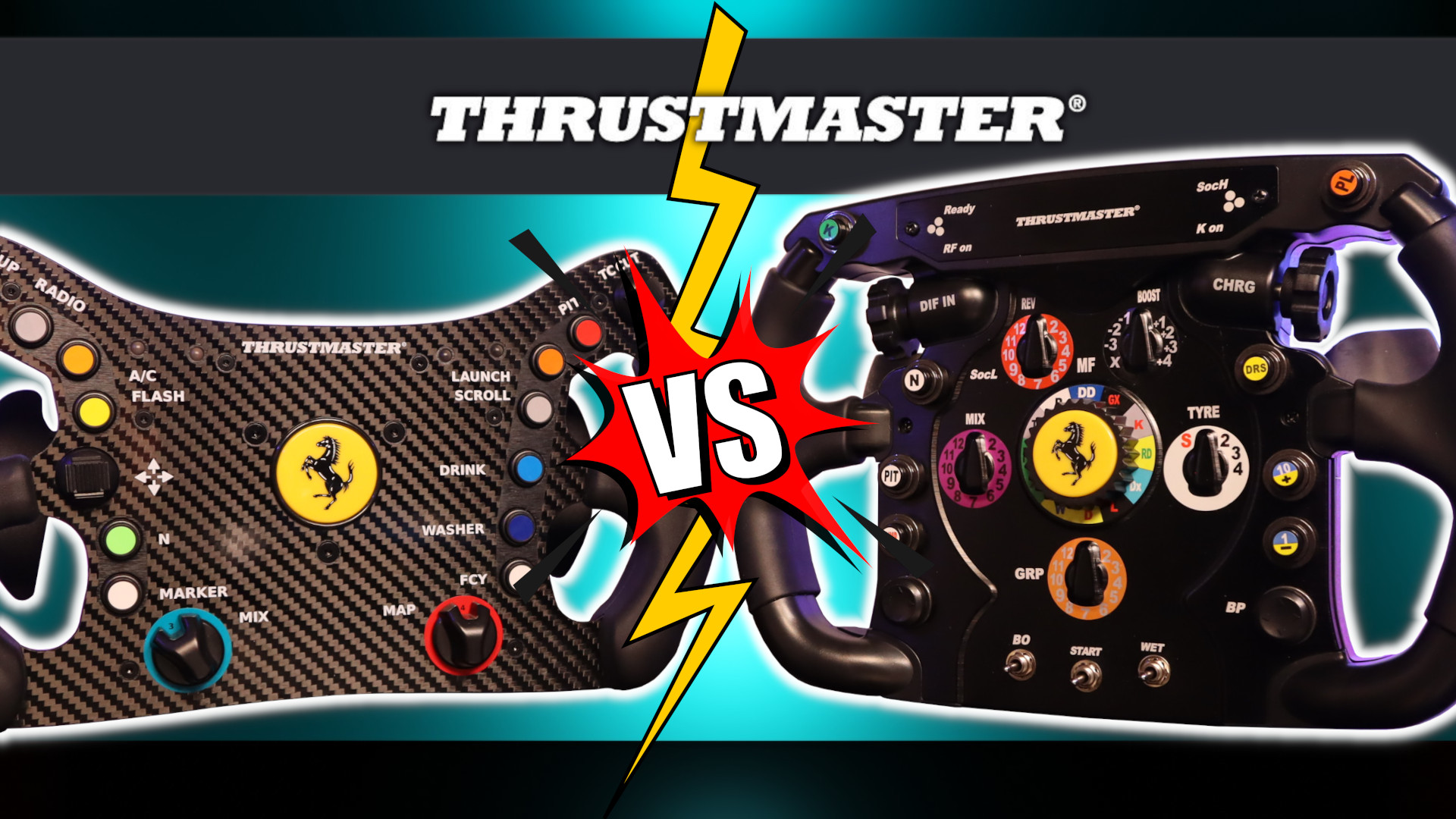
Thrustmaster Ferrari 488 GT3 vs Ferrari F1 Wheel Add-On – Which One Wins?
Today, we’re putting two Thrustmaster wheels head-to-head: the Ferrari 488 GT3 Wheel Add-On and the Ferrari F1 Wheel Add-On.
Both are officially licensed by Ferrari, both have their fanbase — but they’re quite different in feel, materials, and functionality.
Let’s dive in and see which one truly deserves a spot on your rig.
🏎️ Ferrari 488 GT3 Wheel Add-On – Lightweight Precision
Released in late 2023, the Thrustmaster Ferrari 488 GT3 Wheel Add-On is a 1:1 replica of the real steering wheel used in the Ferrari 488 GT3 race car.
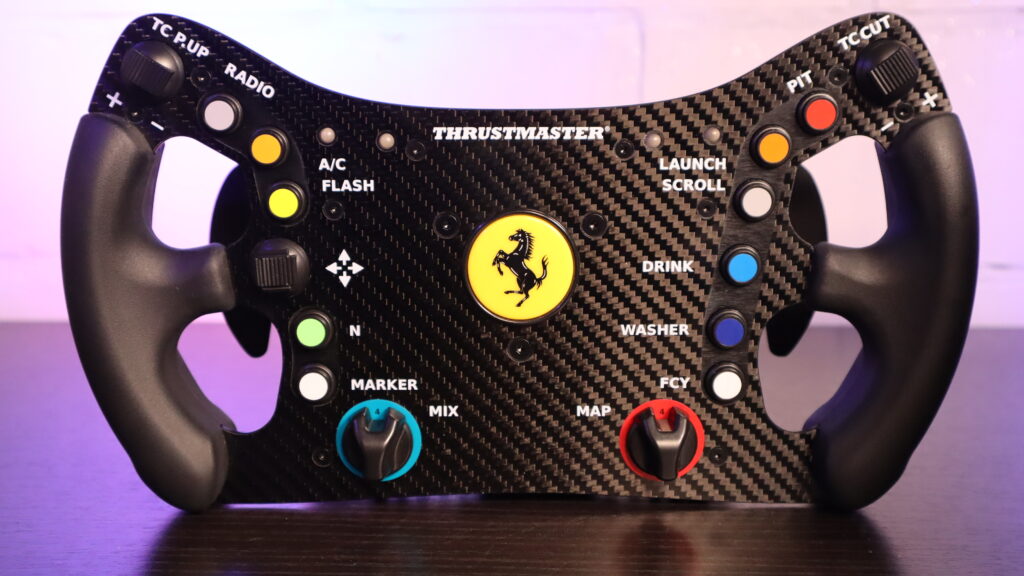
- 💰 Price: €250 (official Thrustmaster store, often cheaper via resellers)
- 📏 Dimensions: 31 × 17 cm
- ⚖️ Weight: 1140 g
The wheel’s front plate is made of carbon fiber, with aluminum magnetic shifters and hardened rubber grips. The rest is durable plastic.
Despite its lightness, it feels solid and focused on performance.
This is Thrustmaster’s first GT3-style wheel, and it sets a strong standard — both in usability and comfort.
🏎️ Ferrari F1 Wheel Add-On – The Veteran Formula Classic
The Ferrari F1 Wheel Add-On, launched back in 2011, remains one of Thrustmaster’s most recognizable wheels.
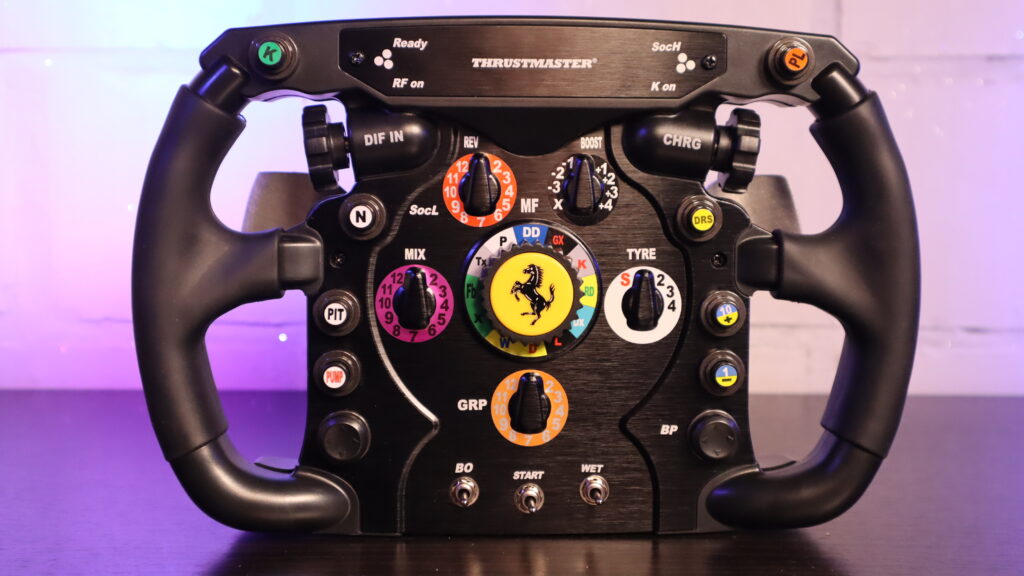
- 💰 Price: €199 (often discounted through dealers)
- 📏 Dimensions: 28 × 19 cm
- ⚖️ Weight: 1295 g
It’s a 1:1 replica of the 2011 Ferrari F1 car wheel, made mostly from plastic with a thin aluminum front plate, metal shifters, and soft rubber grips.
This wheel set the tone for Thrustmaster’s racing catalog and has remained popular thanks to its Formula-style layout and iconic Ferrari branding.
🎛️ Buttons, Switches & Encoders
🔹 488 GT3
- 11 normal buttons
- 2 thumb switches
- 1 D-pad
- 2 rotary encoders
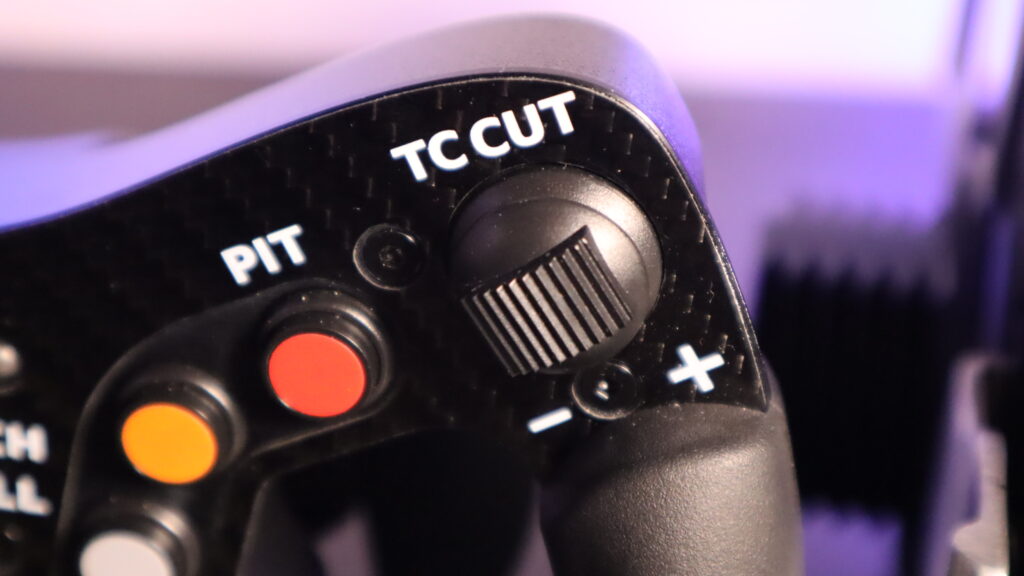
Each button is color-coded and clearly labeled.
The rotary encoders feel tight and reliable, with a printed value system that makes them intuitive to use even mid-race.
While the buttons and D-pad feel slightly plasticky, they’re still responsive and easy to reach.
🔹 F1 Wheel
- 8 normal buttons
- 2 rotary encoders
- 2 D-pad buttons
- 3 mechanical toggle switches (and yes, they’re fun!)
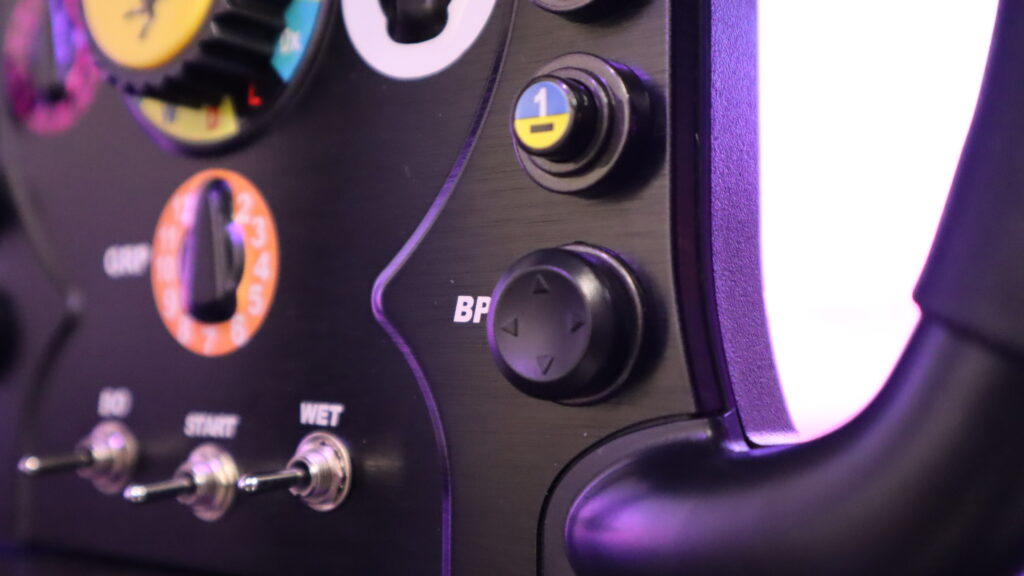
These switches add a lot of character, even if they’re fragile.
The encoders work well, and the buttons have longer travel — not as crisp as on the 488, but functional.
The printed-on dials and lack of illumination make the F1 wheel look good from afar, but less premium up close.
⚙️ Shifters & Feel
🧲 Ferrari 488 GT3
The metal magnetic shifters are a highlight — sharp, tactile, and satisfyingly clicky.
They deliver the kind of response you expect from modern high-end sim wheels.
🪶 Ferrari F1
The brushed aluminum paddles use springs rather than magnets.
They’re quiet and functional, and you can shift up and down with one hand — but they simply lack the precision and feedback of the 488’s magnetic design.
🧩 Build Quality & Comfort
The 488 GT3 clearly wins in materials and ergonomics.
Its thicker grips feel more natural, and you can race bare-handed without discomfort.
Meanwhile, the F1 wheel’s thinner rubber heats up quickly and can rub against your palms during long sessions — gloves are almost required.
In terms of design, the 488 GT3’s simplicity shines.
It doesn’t bombard you with flashy lights — just two LED indicators, subtle and useful.
It’s minimalist done right.
🔧 Compatibility
- 488 GT3 – Compatible with all Thrustmaster wheelbases that use a quick release, including the T818 (adapter included).
- F1 Wheel – Works only with older quick release systems.
That makes the 488 more future-proof and easier to integrate into newer setups.
⚠️ Reliability & Build Issues
The F1 wheel, while iconic, has some durability issues.
Users have reported broken switches, shifting malfunctions, and wear over time — issues I’ve personally experienced too.
In contrast, the 488 GT3 wheel seems far more robust, with no major reliability complaints surfacing online.
💡 Realism & Driving Experience
In use, the 488 GT3 wheel just feels right.
Its larger diameter and thicker grips allow a more natural driving posture, especially in GT and endurance cars.
The rotary sliders instead of traditional encoders are a clever design — smooth, accurate, and tactile.
The F1 wheel offers a more focused Formula feel, but with its older design, plastic body, and less ergonomic grips, it shows its age.
Both are immersive — but in different ways.
💰 Price vs Value
| Feature | 🟥 Ferrari F1 Add-On | 🟩 Ferrari 488 GT3 Add-On |
|---|---|---|
| Price | €199 | €250 |
| Weight | 1295 g | 1140 g |
| Materials | Plastic / thin aluminum | Carbon fiber / aluminum |
| Shifters | Spring-based | Magnetic |
| Buttons & Encoders | Mediocre feel | Improved feedback |
| LEDs | None | Simple dual LED setup |
| Comfort | Gloves recommended | Great bare-handed |
| Compatibility | Older QR only | All current bases (T818 adapter incl.) |
Even with the higher price, the 488 GT3 wheel delivers more value — from materials to ergonomics and usability.
🏆 Verdict
Both wheels have their charm:
- The Ferrari F1 Add-On is a nostalgic classic — fun to use, good-looking, but dated.
- The Ferrari 488 GT3 Add-On is modern, better built, and feels far more refined in use.
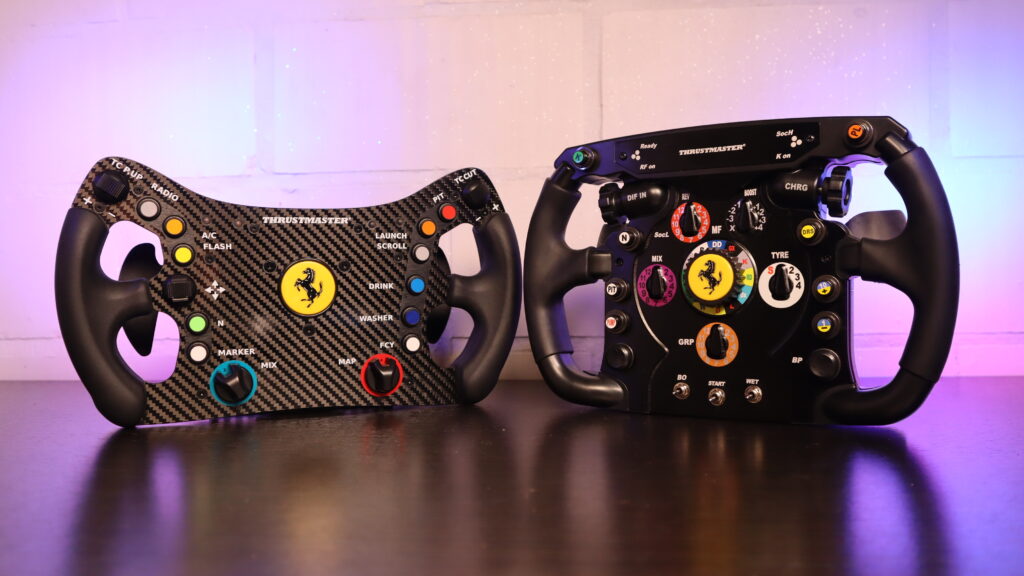
For €50 more, you get a significant step up in quality, comfort, and practicality.
👉 If you value durability, precision, and immersion — go for the 488 GT3.
👉 If you’re after that Formula look and don’t mind an older design — the F1 wheel can still deliver great fun.
If you find my reviews helpful and you’re planning to buy something, using my affiliate link really helps support the channel — at no extra cost to you. Thank you!
Extra resources:
- 🎥Video
- 🛒Affiliate-link Thrustmaster (Use code SimTourist)