Fanatec ClubSport DD+ Review
A powerful, precise direct-drive wheelbase with FullForce technology, an extensive ecosystem and a rather hefty price tag. But does it offer enough over the competition to justify the investment?
I’ve tested quite a few direct-drive wheelbases over the years, and I’ve reached a rather unexpected conclusion. Once you get beyond a certain level of performance, they all start to feel remarkably similar.
That raises an interesting question about the Fanatec ClubSport DD+. With up to 18 Nm of torque, a premium build and its proprietary FullForce technology, it’s certainly an impressive piece of hardware. But when competing wheelbases already offer such a convincing driving experience, how much extra are you really getting for your money?
In this review, I’ll look at the performance, build quality, configuration software, ecosystem and, perhaps most importantly, whether the ClubSport DD+ justifies its premium price.
💶 Price and What’s Included
Let’s start with the elephant in the room: the price.
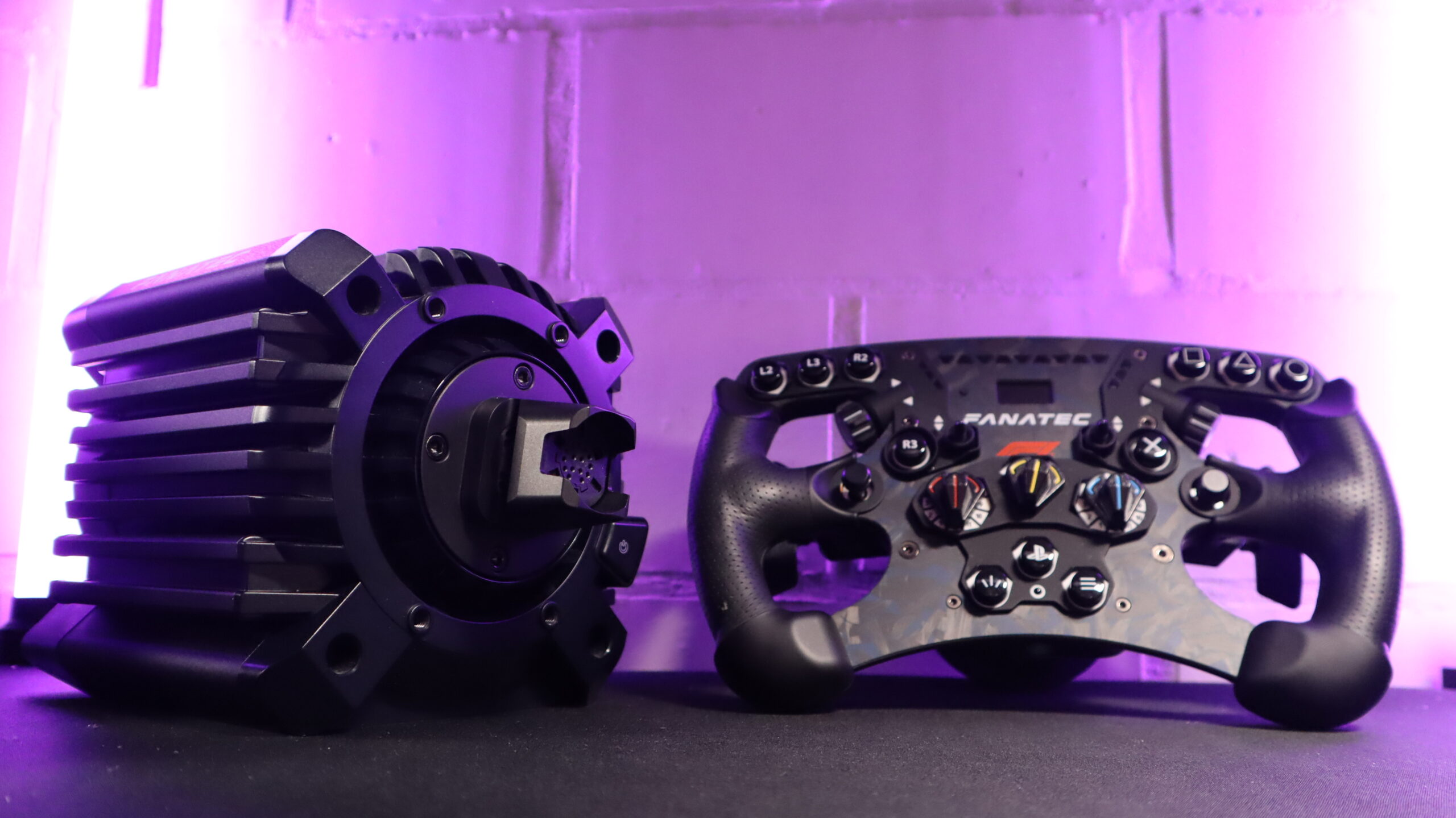
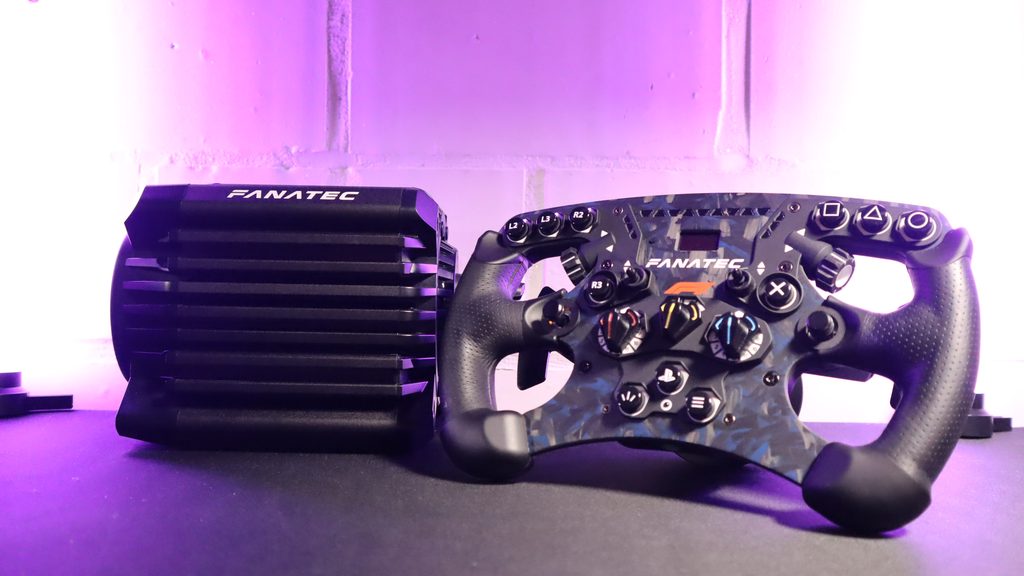
The ClubSport DD+ is a premium wheelbase, and Fanatec certainly charges accordingly. At the time of my review, the PlayStation-compatible DD Extreme package cost approximately €1,150 with the Formula steering wheel and €1,100 with the GT steering wheel.
That’s a considerable investment, even by direct-drive standards.
You can purchase the wheelbase through Fanatec’s own website, as well as through selected retailers. There can be minor differences in pricing between them, but I wouldn’t expect substantial savings.
For that amount of money, you’re getting the wheelbase and the selected steering wheel. It’s a premium package, but it’s also entering a price bracket where expectations are naturally very high.
The question is whether the driving experience is sufficiently different from that of considerably cheaper alternatives to justify the additional expense.
🏗️ Design and Build Quality
The first thing you’ll notice when lifting the ClubSport DD+ out of its box is its weight.
At approximately 12.5 kg, it’s one of the heaviest wheelbases I’ve tested. It measures roughly 25 cm in length, including the quick-release mechanism, and approximately 16 × 16 cm in width and height.
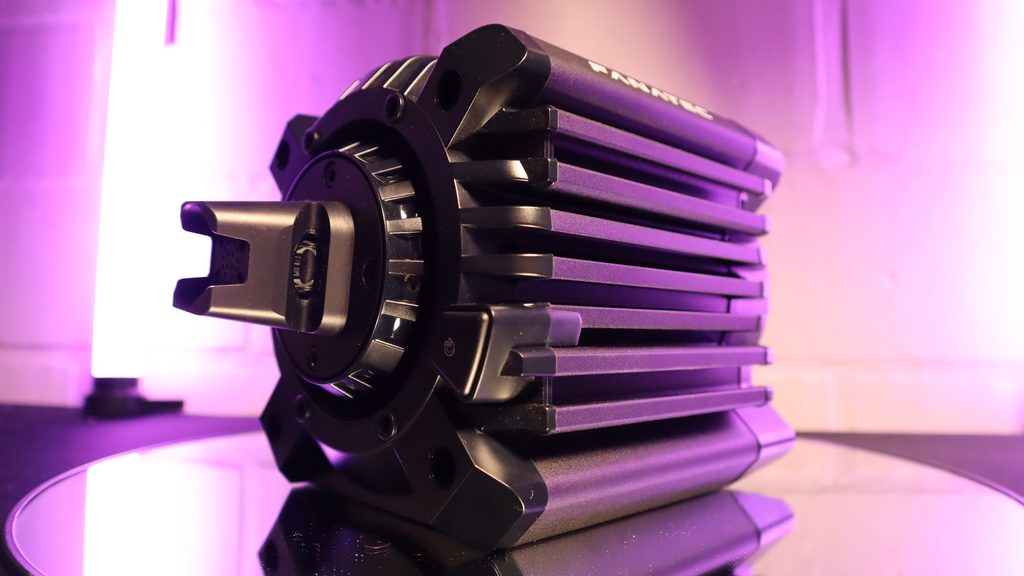
The casing is made from die-cast aluminium, with the design optimised for heat dissipation. It’s a substantial piece of hardware, and the construction certainly gives the impression of a premium product.
Visually, however, Fanatec has opted for a relatively understated design. There are no flashy displays or RGB lighting effects. Apart from the illuminated power button and the blue ring at the rear, the wheelbase has a clean, industrial appearance.
I actually appreciate that approach. It’s a piece of equipment designed to do a job rather than attract attention.
Mounting is possible from either the sides or the bottom, giving you some flexibility when installing it in different cockpits.
It also comes equipped with the QR2 quick-release system, a considerable improvement over Fanatec’s older quick-release solutions. It’s compatible with most of Fanatec’s modern steering wheels, although compatibility naturally depends on the individual wheel.
💪 Force Feedback and Torque
This is where the ClubSport DD+ really starts to distinguish itself on paper.
When it was first introduced, the wheelbase offered a maximum torque of 15 Nm. Fanatec subsequently increased that figure to 18 Nm through software adjustments.
That’s a substantial amount of torque, particularly for a wheelbase that supports PlayStation.
But do you actually need it?
Personally, I don’t think so. When using the ClubSport DD+ on PC, I generally ran it at around 65–70% of its available torque. Even at that setting, there was more than enough power for my driving preferences.
In fact, I’d consider 8–10 Nm the sweet spot for most people. It provides enough force to communicate what the car is doing without making every driving session a workout.
There is, of course, an advantage to having more torque available. A higher maximum torque gives you more headroom for force feedback effects, reducing the likelihood of clipping when the game demands particularly strong forces.
However, that doesn’t necessarily mean you’ll experience a dramatic improvement in driving simply by increasing the maximum torque.
Going from 15 to 18 Nm makes very little difference to my actual driving experience. The additional power is there if you need it, but I rarely find myself wanting it.
The difference between a 5 Nm wheelbase and an 18 Nm one is certainly substantial. However, once you’re already in the 15 Nm range, the additional three Newton metres become considerably less meaningful to me.
🏎️ Driving Experience and Precision
I’ve tested the ClubSport DD+ in Assetto Corsa Competizione on PC, and there’s very little to complain about in terms of its driving performance.
The steering is precise, direct and capable of producing very strong forces. Whether you prefer relatively light steering or something considerably heavier, there’s more than enough headroom to accommodate your preferences.
The wheelbase also feels exceptionally smooth and responsive. Inputs are communicated directly, and the force feedback has the strength and precision you’d expect from a product in this price bracket.
But here’s where things get interesting.
I’ve driven quite a few modern direct-drive wheelbases, and the differences between them are becoming increasingly difficult to distinguish during normal driving.
Of course, there are technical differences. Cogging, clipping, responsiveness and the way individual wheelbases reproduce force feedback effects can all influence the driving experience.
However, the gap between modern direct-drive systems is considerably smaller than their specifications and marketing might suggest.
The ClubSport DD+ feels fantastic, but so do several considerably less expensive alternatives.
That’s not to say that there are no differences. A direct, back-to-back comparison would be necessary to properly assess some of the more subtle characteristics. In particular, I’d like to compare the smoothness and responsiveness of the DD+ directly with competing wheelbases.
What I can say from my testing is that the DD+ delivers a very convincing driving experience. It has plenty of power, excellent precision and a smooth feel.
The question is how much of that experience is exclusive to Fanatec.
🌊 FullForce – A Meaningful Difference
If there’s one feature that genuinely distinguishes the ClubSport DD+ from many competing wheelbases, it’s FullForce.
I’ve been a fan of this type of secondary force feedback ever since I first experienced it on the Thrustmaster T-GT several years ago. The principle is relatively simple: supplement conventional force feedback with additional vibrations and finer details that make the driving experience more immersive.
Traditional force feedback communicates the most important information you need when driving. Cornering forces, understeer, oversteer, suspension movement and weight transfer are all essential elements of the driving experience.
However, there are moments when the steering can feel relatively lifeless. Think about driving along a long straight or cruising over a particularly smooth section of track.
That’s where FullForce comes in.
By adding additional vibrations and texture, it can reproduce engine vibrations, gear changes and road-surface details. These effects don’t necessarily make you faster, but they do add another dimension to the driving experience.
After finally testing FullForce in Gran Turismo 7, I can say that I really appreciate what it brings to the table.
It adds a layer of immersion that conventional force feedback doesn’t always provide. For me, that’s particularly enjoyable during calmer sections of a track, where the steering would otherwise provide relatively little additional information.
Of course, whether you enjoy this extra layer of feedback is entirely personal. Some drivers prefer to focus exclusively on the forces transmitted through the steering wheel, while others appreciate having additional tactile information.
I’m firmly in the latter camp.
For me, FullForce is one of the most interesting features of the ClubSport DD+ and a genuine reason to consider Fanatec’s ecosystem.
Unfortunately, the technology’s implementation and the way it was marketed are another matter entirely.
💻 Fanatec Software and Firmware
Fanatec has made considerable efforts to bring its software ecosystem together.
Previously, firmware management, wheelbase configuration and FanaLab were separate elements of the experience. Fanatec has since worked towards integrating these functions into a more unified software package.
The result is reasonably good. The familiar configuration options are still there, and anyone who has used Fanatec equipment before should feel relatively comfortable navigating the settings.
However, I do wonder whether the new interface could have gone a little further. Much of the configuration experience feels very familiar, almost as if the previous settings pages have simply been transferred into the new software.
That’s not necessarily a bad thing, but I would have liked to see more substantial improvements to the overall user experience.
My biggest frustration was the installation and updating process.
I already had an older version of Fanatec’s software installed, and upgrading it proved to be surprisingly troublesome. I had to restart my PC repeatedly before everything was installed correctly.
The firmware updater itself also wasn’t particularly user-friendly compared with the solutions I’ve encountered from other manufacturers.
Once everything was installed and working, the software performed reasonably well. My criticism is primarily directed at the installation, updating and general ease of use rather than the actual configuration options.
For a premium product, I would have liked to see a more straightforward experience from the very beginning.
🧩 The Fanatec Ecosystem
One of Fanatec’s biggest advantages has traditionally been its extensive ecosystem.
If you’re looking for steering wheels, pedals, shifters or other sim racing accessories, Fanatec offers a wide selection of products that work together within its ecosystem.
That remains an important selling point.
However, the competition has been catching up, and the gap isn’t as pronounced as it once was.
MOZA, for example, has expanded its product range considerably. In addition to conventional steering wheels and pedals, it offers products such as a dedicated trucking steering wheel and multifunction stalks.
Fanatec currently doesn’t offer comparable trucking-focused products.
I actually discussed this with Fanatec at SimExpo a couple of years ago. Their response was that racing is at the heart of the company and that trucking peripherals weren’t part of its intended direction.
That’s understandable from a product strategy perspective, but it does mean that customers looking for a more diverse range of driving experiences may find other ecosystems more appealing.
Logitech has also been expanding its range of sim racing products, further narrowing the gap.
Fanatec still has an extensive ecosystem, but its competitors are catching up quickly. The difference is no longer as clear-cut as it once was.
For someone who primarily enjoys circuit racing, Fanatec has plenty to offer. However, if you also enjoy trucking, road driving or other simulator experiences, it’s worth looking at what the competition offers.
🛠️ Reliability and Reported Issues
The ClubSport DD+ has had its share of reported problems since its introduction.
Some users experienced steering wheel disconnections during races, interruptions to force feedback and unexpected reconnections. There were also reports of excessive coil whine on certain units.
I didn’t experience excessive coil whine during my own testing, so I can’t comment on how widespread that particular issue is.
The connectivity and force feedback problems, on the other hand, were reported by a number of users. Firmware updates appear to have addressed at least some of these issues over time.
It’s important to distinguish between reported problems and my own experience. I didn’t encounter all the issues described by other users, and my review unit performed well in terms of its core hardware.
Overall, I consider the hardware itself to be solid. The issues that attracted the most attention seem to have been largely related to firmware and software rather than fundamental weaknesses in the wheelbase’s construction.
Nevertheless, the experience of other owners is worth keeping in mind, particularly when investing this much money in a piece of hardware.
📢 FullForce and Fanatec’s Marketing Promises
This is probably my biggest criticism of the ClubSport DD+.
When Fanatec introduced FullForce, the company made it a major part of the wheelbase’s appeal. It was presented as an important new technology that would add another dimension to the driving experience, in a similar way to Logitech’s TrueForce.
And I was genuinely excited about it.
Unfortunately, the time it took for FullForce to become available in major games was extremely disappointing.
Although the technology was part of the product’s original proposition, users had to wait a considerable amount of time before they could actually experience it in the games they cared about.
iRacing was among the first to receive support, while Gran Turismo 7, arguably one of the most important titles for this PlayStation-compatible wheelbase, followed much later.
I raised the issue on the Fanatec forum and received a response pointing towards the developers of the games, including Polyphony Digital, as being responsible for implementing support.
Technically, game developers do indeed need to integrate support for technologies like FullForce. However, from a customer’s perspective, that distinction doesn’t change the original promise.
If a manufacturer promotes a new technology as a major selling point, customers naturally expect to be able to use it within a reasonable timeframe, particularly in the games most closely associated with the product.
I don’t think it’s unreasonable to expect clearer communication about the availability of such features before making a purchase.
And that’s what frustrated me most about the entire situation. FullForce was an important part of the marketing campaign, but for a considerable period, it wasn’t available in the games where I wanted to use it.
Now that I’ve finally experienced it in Gran Turismo 7, I’m genuinely impressed. I enjoy it, and I’m glad the feature is finally available.
But that doesn’t erase my disappointment with the long wait or the way expectations were managed.
For me, the technology itself delivers. The experience of waiting for it certainly didn’t.
⚖️ Is the ClubSport DD+ Worth the Price?
This is where the ClubSport DD+ becomes a difficult product to evaluate.
On its own merits, it’s an excellent wheelbase. It’s powerful, precise, smooth and offers a premium build. FullForce also adds something meaningful to the experience, particularly if you enjoy driving in Gran Turismo 7.
However, the competition has made significant progress.
The Logitech RS50, for example, offers substantial torque and TrueForce support in a considerably wider selection of games. Meanwhile, the Fanatec GT DD Pro and CSL DD already provide enough power for many drivers, with FullForce support also planned for those platforms.
That raises an important question: how much additional value does the ClubSport DD+ actually provide?
On PlayStation, its power and FullForce implementation are compelling features. But if you already have a GT DD Pro and are happy with its performance, I find it difficult to justify spending considerably more simply to gain additional torque.
On PC, the argument is similar. The DD+ offers plenty of power and supports FullForce in iRacing, but whether that additional capability justifies its price depends very much on your needs.
I personally enjoy the Logitech RS50 and its TrueForce implementation. Its compatibility with a wider range of games is an important advantage for someone like me, who enjoys more than just circuit racing.
And when it comes to torque, I’m already perfectly happy with what an 8 Nm wheelbase can offer.
That doesn’t make the ClubSport DD+ a poor product. It simply means that many of its technical advantages may not translate into a noticeably better driving experience for everyone.
At this price, the distinction between what you can have and what you actually need becomes particularly important.
🏁 Final Verdict
The Fanatec ClubSport DD+ is a brilliant piece of hardware. It’s powerful, smooth, precise and exceptionally capable. With FullForce now available in Gran Turismo 7, it also offers a genuinely enjoyable extra dimension to the driving experience.
However, its biggest strength is also part of its biggest problem: it operates in a market where the differences between modern direct-drive wheelbases are becoming increasingly difficult to distinguish during everyday driving.
The additional torque is impressive, but I rarely need it. The driving experience is excellent, but so is that of several considerably less expensive alternatives. And while the Fanatec ecosystem remains extensive, competitors such as MOZA and Logitech are steadily expanding their offerings.
Then there’s the price.
At around €1,100–€1,150 for the complete package, the ClubSport DD+ is a substantial investment. For someone who wants a powerful PlayStation wheelbase and values FullForce, it has a compelling feature set. For PC users, or drivers who are already happy with a less powerful wheelbase, the additional expense is considerably harder to justify.
I also can’t overlook the disappointment surrounding FullForce’s delayed implementation. The technology itself is excellent, but the wait to experience it in some of the most important games was frustrating.
So, would I recommend the ClubSport DD+?
That depends entirely on what you’re looking for. If you want a powerful, premium PlayStation-compatible wheelbase and intend to take full advantage of FullForce, there’s a lot to appreciate here. If you’re primarily interested in the driving experience itself, however, I’d encourage you to consider just how much of that experience you can already get from less expensive alternatives.
For me, the ClubSport DD+ is a brilliant piece of hardware, but its price and the limited practical difference over the competition make it a difficult proposition.
It’s an impressive wheelbase, but impressive specifications don’t automatically translate into proportionally better value.
Extra resources:


