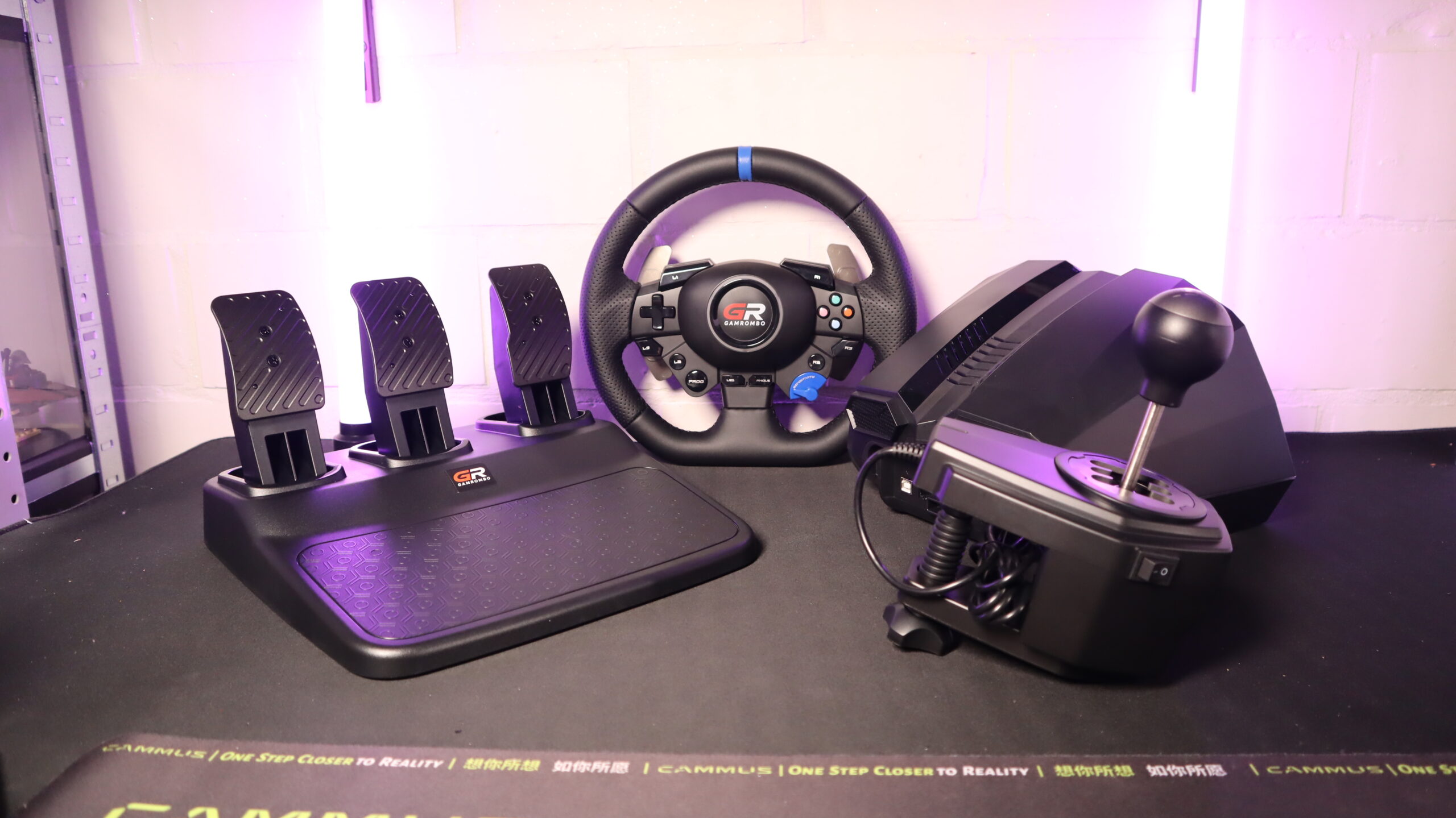
Gamrombo Monaco Review
A steering wheel, pedals and a shifter for around $200. On paper, the Gamrombo Monaco sounds like a complete package for someone looking to get into simulated driving without spending a fortune. But there’s one rather important detail: the Monaco doesn’t have active force feedback.
That immediately puts it in a different category from many of the steering wheels on the market today. Instead of motors recreating the forces you feel through a car, the Monaco relies on a passive centring mechanism to bring the wheel back to the middle.
So, is there still a place for a product like this? I tested the Gamrombo Monaco with Gran Turismo 7 on PlayStation 5 and several driving games on PC to find out. There are a few things I like, but also some problems that make its asking price difficult to justify.
Let’s take a closer look.
📦 First impressions and what’s included
The Gamrombo Monaco is sold as a complete package, including the steering wheel and wheelbase, a three-pedal set and a separate H-pattern shifter. That gives you everything you need to get started with a more traditional driving setup, without having to purchase the main components separately.
The design is fairly distinctive, with angular black plastic housings, a blue centre marker on the steering wheel and an LED ring around the central logo. It’s not the most premium-looking equipment I’ve tested, but it does have a recognisable design of its own.
The important question, of course, is how it feels and performs once you start driving.
🛠️ The wheelbase – Simple, but bulky
The Monaco wheelbase is made entirely from hard black plastic. On the front, you’ll find three function buttons, a button for locking the steering angle and a headset jack. The sides feature LED lighting, which adds a little character to the otherwise understated design.
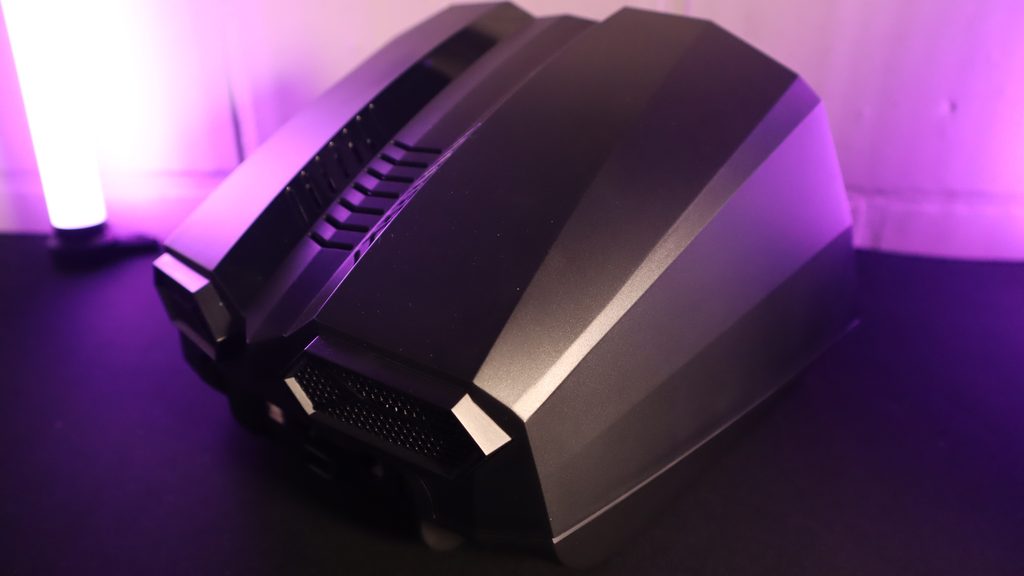
At the back are the connections for the pedals and shifter, using RJ11 and RJ12 connectors respectively. The wheelbase connects to a PC through a USB-C-to-USB-A cable.
I would have preferred standard USB connections for the peripherals. Using different RJ connectors feels a little dated and makes the system less flexible if you ever need to replace a cable.
The wheelbase is also surprisingly bulky for a unit without a force-feedback motor inside. Still, I quite like the overall design, and the LED strips are a nice touch.
The steering input is measured using a Hall sensor. For mounting, you can either use the supplied clamps or secure the wheelbase with bolts.
Unfortunately, the mounting system isn’t particularly universal. I couldn’t use the clamps on either my Trak Racer TR5 or my Oplite GTR S8 because the clamps interfered with the supporting brackets around the wheelbase mount. If you want to bolt it down instead, the mounting holes are approximately 17 cm apart, so you’ll need a sufficiently wide mounting plate.
This is one of those details that might not matter if you’re attaching the Monaco to a simple desk, but it can become a real inconvenience if you already own a cockpit.
🎮 The steering wheel – Better in the hands than it looks
The steering wheel is made from plastic and features 13 buttons, a D-pad and a sensitivity slider. The central logo is surrounded by an LED ring, and the D-shaped rim measures 27 cm across, with faux-leather upholstery.
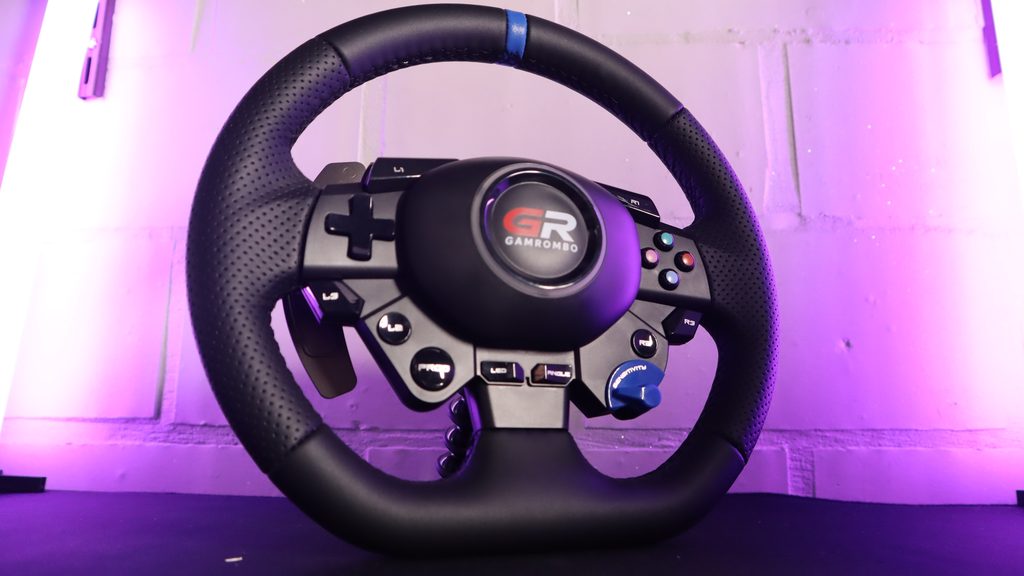
Once I started using it, I found the wheel more comfortable than I initially expected. It feels light, but the rim provides a decent grip, even when wearing gloves. The button layout is also sensible, and I didn’t have any major complaints about the positioning.
The buttons themselves are non-mechanical, so don’t expect the tactile feedback you’d get from more expensive hardware. The coloured buttons on the right are a matter of personal taste, too.
Around the back, you’ll find the paddle shifters. Unfortunately, these are among the weakest parts of the steering wheel. They’re very light and feel rather flimsy, to the point where they’re the components I’d be most worried about breaking over time.
The quick-release system is simple: you screw the wheel on and unscrew it to remove it. It’s easy to use, although the plastic construction doesn’t inspire quite the same confidence as a sturdier system would.
For a wheel without active force feedback, this isn’t necessarily a deal-breaker. There simply aren’t the same forces acting on the connection as there would be on a powerful direct-drive wheelbase.
🦶 The pedals – Functional, but basic
The three-pedal set follows the same all-plastic approach. The base measures 29 cm across, while each pedal face is approximately 5.5 cm wide.
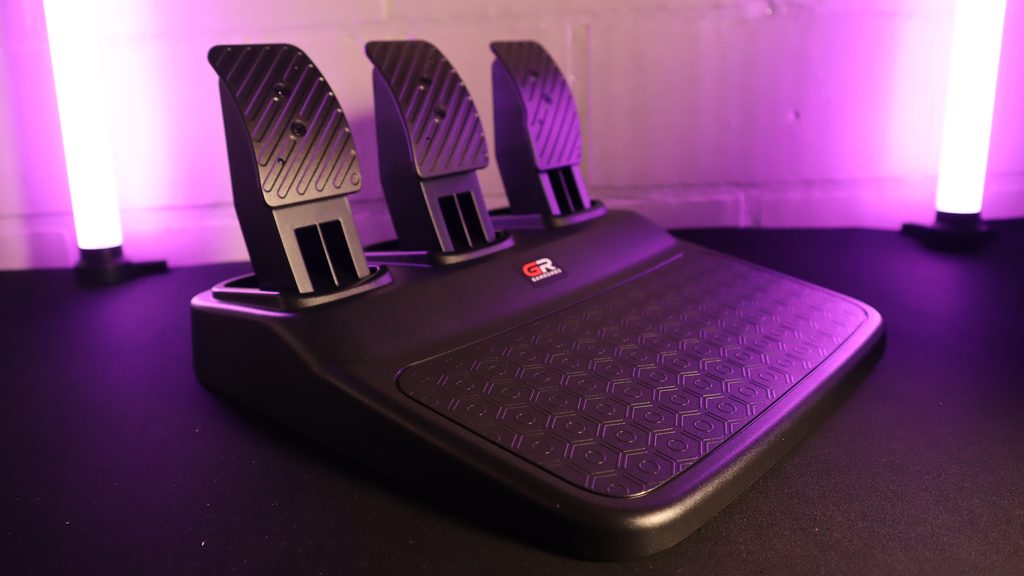
The pedals use Hall sensors to measure input, but there’s very little room for personalisation. You can’t adjust the position of the pedals or their faces, and the springs appear to use similar resistance. They also aren’t configurable or replaceable.
In practice, the pedals do their job. The accelerator, brake and clutch are straightforward to use, but they don’t feel particularly distinct from one another.
The brake is where I would most like to see an improvement. When driving the bus, I found it too light, with resistance that’s much closer to the accelerator than I’d prefer. A heavier brake spring, or even an optional upgrade, would make the experience more convincing.
The pedal board attaches using two screws underneath. More mounting points and additional adjustment options would also make it easier to integrate into different cockpits.
⚙️ The shifter – A welcome extra, with a few rough edges
A separate H-pattern shifter is one of the appealing parts of the Monaco package. It gives you a more traditional way to change gears instead of relying entirely on paddles.
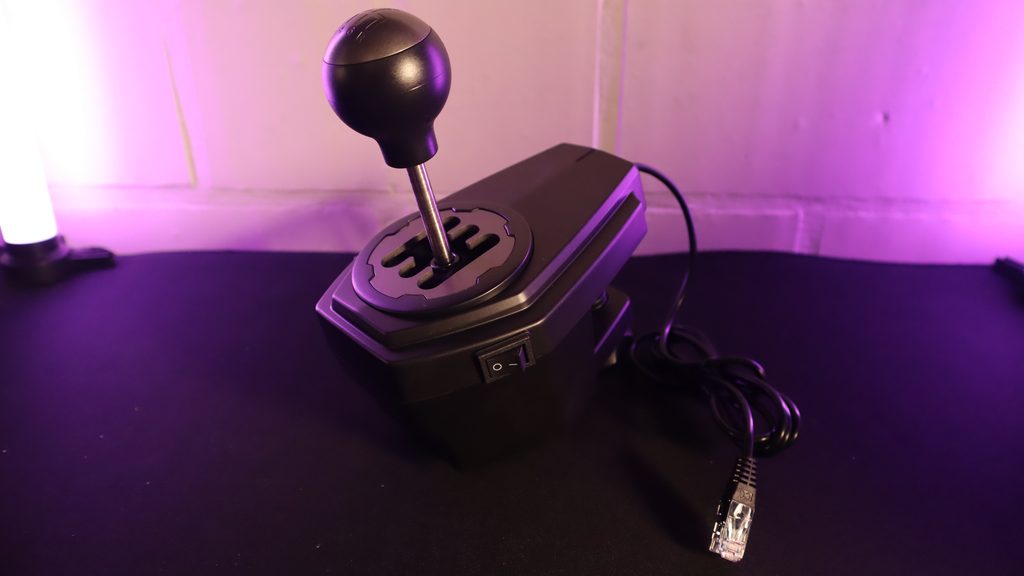
The shifter is made from plastic and features six gates, along with two switches. One controls the parking brake, while the other changes the input mode. Gear changes produce a light mechanical click.
It’s a useful addition to a complete bundle, and I enjoyed having a manual shifter available during testing. However, the gear knob has some noticeable movement and feels a little loose.
I also found the purpose of the second switch less obvious than it should be. Better labelling and clearer instructions in the manual would make the controls easier to understand.
There is room to improve the mounting clamp, too, particularly if Gamrombo wants the shifter to work well on a wider range of desks and cockpit frames.
🎮 Compatibility and setup
The Gamrombo Monaco is advertised as compatible with PlayStation 4, PlayStation 5 and PC.
On PS5, connecting the wheel to Gran Turismo 7 was straightforward. I was up and running quickly, without any major installation problems.
PC was a little less straightforward. I had to search for information to get the wheel working in the games I wanted to test, and I would have appreciated clearer setup instructions or dedicated configuration software.
I also encountered inconsistent results between games. I couldn’t get the Monaco working in Taxi Simulator: A City Life, one of my favourite driving games, while it did work in Outbound and Bus Bound.
That doesn’t necessarily mean the wheel is incompatible with every setup in which it failed for me, but it does highlight the need for better documentation and clearer guidance on supported games.
🚗 Behind the wheel – Is it fun to drive?
This is where the Monaco becomes a more interesting product, because the answer depends quite a bit on what you want to play.
🏁 Gran Turismo 7 on PS5
Let’s start with Gran Turismo 7. After all, this is a racing game, and it’s the kind of title where force feedback can make a big difference.
The first thing to say is that using a steering wheel is still enjoyable compared with using a controller. Being able to turn a physical wheel and change gears with a separate shifter makes the experience feel more like driving a car.
But there’s a catch.
The Monaco uses passive centring. A rubber band inside the casing pulls the wheel back towards the centre, and that’s essentially all it does. You don’t feel the car’s forces through the wheel, and you won’t feel the steering react as you drive over kerbs.
That takes away a significant part of the immersion. With active force feedback, the steering wheel can communicate what the car is doing, helping you understand the road surface and the forces acting on the vehicle. The Monaco simply can’t provide that experience.
I also noticed what appeared to be a delay between turning the wheel and seeing the car respond. The steering felt a little sluggish, and it’s something I’d like Gamrombo to investigate.
The wheel itself was comfortable enough to use, and the buttons were well placed. The paddle shifters, however, felt too flimsy for my liking.
The separate shifter was more enjoyable to use, although I ran into a strange issue in Gran Turismo 7: I couldn’t select reverse gear with my five-speed DeLorean. If I drove straight into a wall, getting back out became a bit of a problem!
The pedals were functional, but their similar resistance made them feel rather basic.
Overall, Gran Turismo 7 highlighted the Monaco’s biggest limitation. A wheel is more immersive than a controller in some ways, but without force feedback, you miss an important part of what makes driving with a wheel so engaging.
🚌 Relaxed driving games on PC
Things changed a little when I moved away from racing games.
In relaxed driving titles such as Bus Bound and Outbound, force feedback is less central to the experience. You’re often driving at lower speeds, exploring the environment or simply enjoying the journey rather than trying to feel every kerb and every change in grip.
The Monaco felt more appropriate here.
I still noticed what seemed to be some steering delay, but it was much less distracting when driving a bus at around 20 miles per hour. The wheel felt comfortable in my hands, and I could enjoy the slower pace without constantly wishing I had more feedback through the steering.
The pedals were still a weak point. In particular, the brake felt too light when driving the bus. I’d like to see Gamrombo offer a stiffer spring or some other way to increase the resistance.
It’s worth repeating that I couldn’t get the wheel working in Taxi Simulator: A City Life, so I wasn’t able to test it in every game I had planned to use.
Still, these tests helped me understand where a non-force-feedback wheel might make more sense. If your priority is relaxed driving rather than competitive racing, the absence of force feedback may be less of a deal-breaker. You still need to consider the setup process, game compatibility and overall price, though.
💡 Features worth mentioning
There are a few extra features on the Monaco that deserve some credit.
The LED ring around the central logo can display different colours, and it includes a breathing mode. Holding the relevant button for three seconds activates that effect.
The wheel also offers three sensitivity modes. On top of that, you can mechanically lock the steering wheel to a smaller rotation angle. You can do this by holding the wheel at the desired position and pressing the angle button for three seconds; the rotation can also be adjusted through software.
These are useful touches, particularly for a product aimed at people who may not want to spend a lot of time configuring a complicated setup.
The quick release is another feature that gives the Monaco a little room to grow. However, Gamrombo is only just entering this market with its first steering wheel, so there isn’t an established ecosystem of compatible wheels and accessories to speak of yet. Whether additional products will follow remains to be seen.
⚖️ The good and the bad
👍 What I liked
- A complete package with a wheel, pedals and shifter.
- A comfortable steering wheel with a sensible button layout.
- A separate H-pattern shifter adds to the driving experience.
- LED lighting and adjustable steering sensitivity.
- Simple plug-and-play connection to the PS5 in my Gran Turismo 7 test.
- Passive centring can be adequate for some slower, relaxed driving games.
👎 What could be improved
- No active force feedback, which significantly limits immersion in racing games.
- The paddle shifters feel flimsy.
- The brake pedal is too light and the pedals offer very little adjustment.
- The wheelbase mounting system caused problems with two of the cockpits I tested.
- The shifter knob feels loose.
- PC setup and game compatibility could be better documented.
- The apparent steering delay needs further investigation.
- The price is difficult to justify against more established alternatives.
💰 Price and value – The biggest obstacle
This is where I struggle most with the Gamrombo Monaco.
At around $198, the bundle isn’t particularly cheap. Yes, it includes a wheel, pedals and a shifter, along with a quick-release system and some lighting. But the absence of active force feedback is a major compromise, and the overall build quality doesn’t make up for it.
At a similar price, depending on the market and current offers, you may be able to find a new Logitech G29. The G29 offers a more established force-feedback experience and, in my view, better overall technology and build quality.
That makes the Monaco difficult to recommend at its current asking price. Its extra shifter and lighting are nice to have, but they don’t outweigh the limitations for me.
I think Gamrombo needs to decide where the Monaco belongs in the market. It could aim to be one of the best-built non-force-feedback wheels available, with a focus on quality and ease of use. Alternatively, it could compete as a genuinely affordable entry-level package.
At the moment, it sits in an awkward middle ground: it lacks a feature that many drivers consider important, while costing enough that established alternatives become relevant.
🏁 Final verdict – A promising idea at the wrong price
I don’t think every steering wheel needs force feedback to be enjoyable. For relaxed driving games, a physical wheel and a separate shifter can still offer an experience that a controller doesn’t quite replicate.
The Gamrombo Monaco has some positive points. The steering wheel is comfortable, the button layout is sensible, the LED lighting adds character, and the inclusion of a separate shifter makes the package feel complete.
But there are too many compromises at this price. The flimsy paddle shifters, light brake pedal, limited adjustability, mounting problems and inconsistent game compatibility all need attention. And, of course, the lack of active force feedback remains the biggest limitation, particularly for racing games.
For me, the combination of the price and the build quality is the hardest part to overlook. I struggle to find a convincing reason to choose the Monaco over an established force-feedback wheel at a similar price.
That doesn’t mean Gamrombo has no future in this market. The Monaco is its first steering wheel, and there is room to learn from the feedback and improve future products. Better mounting options, sturdier components, clearer documentation and a more competitive price would make a meaningful difference.
The idea of a complete, accessible driving bundle is a good one. The Monaco just needs to deliver more for the money.
I’d like to see what Gamrombo comes up with next. For now, though, I think the Monaco needs either a significant improvement in quality or a much lower price to stand out in today’s market.
Extra resources:


